
Blog
The Portfolio Audit: How to Show Your Best Work Before You Hit Send on Your Application


Information Leak
In action sports, your portfolio talks before you do. A hiring manager decides in seconds whether to keep reading, and they are not counting how many pieces you crammed in. They are looking for proof you can do the exact job in front of them. Here is the hard truth almost nobody acts on: most people send the wrong work. They lead with their favorite piece instead of the most relevant one, bury the good stuff on page four, and never tailor a thing. This is a one-hour audit that fixes all of it, built around real jobs open on Malakye right now.
What a portfolio actually has to do
A portfolio is not a highlight reel of everything you can do. It is a risk-reducer. The person hiring is trying to answer one quiet question: if I bet on this human, will it work out? Everything in your portfolio either answers that or gets in the way. As the team at Learn UI Design puts it bluntly, the most common portfolio failure is showing only the pretty final output while hiding the thinking, the goal, and the decisions that got you there. Recruiters on Behance say the same thing from the other side of the desk: they scan for a clear description of what you actually did on each project and evidence of strategic thinking, not just polish.
So the bar is not "is this beautiful." The bar is "does this prove I can do the specific work this brand needs." That reframe changes everything about what you keep and what you cut.
Match the work to the job, not the other way around
The single biggest upgrade is tailoring your first three pieces to the job type. A generalist dump loses to a focused set every time. Pull the job off the jobs board and read what it actually asks for, then lead with the work that mirrors it. Here is what that looks like across the four job families hiring in this industry today.
Graphic and brand design. A brand wants range and consistency: layout, type, a recognizable point of view held across many pieces. For a job like Senior Graphic Designer at Southern Marsh (remote, seventy five to one hundred five thousand) or Brand Designer at Ethika, lead with a cohesive brand system, not ten unrelated one-offs. Show the same brand voice applied across product, packaging, and social so they can picture you owning theirs.
Product, industrial, and footwear design. This is where craft is non-negotiable. For Footwear Designer at Adidas Golf (one hundred three to one hundred eighteen thousand) or Industrial Product Designer at Old Man Mountain (seventy two thousand), a pretty hero render is not enough. Show the sketches, the iterations, the outsole or mechanism studies, the line plan, and the finished product side by side, so they can trace how you think from problem to object. Hiring managers in footwear specifically want to compare your claims against real sketches, renders, and construction detail. Give them that on page one.
Technical apparel design. Fit, spec, and construction are the job. For Senior Technical Designer at AETHER Apparel or Senior Apparel Designer, Men's at Catalyst Creative Group, show tech packs, graded specs, fit-session notes, and how a garment evolved from first sample to production. A moodboard will not get you this job. Evidence that you can take a garment to manufacturable reality will.
Marketing, content, and operations. Here your portfolio is results, not renders. For a Marketing Leader at Legendary Headwear or a Marketing Activation Specialist at Tecnica Group, show the campaign, the before-and-after numbers, the launch you ran, the content that moved. Even for an operations job like Retail Operations Office Manager at Mountain Chalet (forty eight to sixty two thousand), a one-page case study of a process you fixed or a system you built is a portfolio, and almost nobody in ops brings one. Doing it makes you unforgettable.
The mistakes that quietly tank good candidates
Most rejections are not talent problems. They are curation problems. These are the ones that kill applications in product, footwear, and technical apparel:
- Leading with volume. Twenty projects say you cannot tell which of your own work is best. A tight set of your five strongest, most relevant pieces beats a sprawling archive, a point both Behance and hiring managers hammer on constantly.
- Output with no thinking. A wall of final renders and zero context reads as "I can push the software," not "I can solve the problem." Add the goal, the constraint, and the decision behind each piece.
- No relevance to the job. Sending the same portfolio everywhere. If the piece does not map to what the posting asks for, it is working against you.
- Sloppy presentation. Low-resolution images, inconsistent layout, typos in the captions. In a craft job, a messy portfolio is itself evidence you will ship messy work.
- Hiding the process for apparel and footwear. If they cannot see your sketches, specs, and iterations, they assume you do not have them.
No pro experience yet? Build the portfolio anyway
The oldest trap in this industry is thinking you need a job to build a portfolio to get a job. You do not. The work you show does not have to be paid, it has to be real and thoughtful. Three sources of pieces that genuinely land jobs:
- Case studies and redesigns. Pick a brand you love, find a real problem, and solve it. Redesign a product, a line, a campaign, or a checkout flow, and document your thinking start to finish. A sharp self-directed case study often beats a mediocre client job, because it shows exactly how you attack a problem.
- School and personal projects. These count, as long as you present them like professional work: real goal, real constraints, real decisions. Cut the class assignment framing and show the outcome.
- Freelance and spec work. One small freelance job, a friend's brand, a local shop, gives you a live problem and a real deliverable. Put your best pieces where recruiters actually look, on Behance or Coroflot, and treat those as distribution, not as your only home.
Entry points exist right now for exactly these people. Brands post junior and intern jobs like Design, Marketing, and Operations internships at Salvation Brands, and the fastest way through the door is a small, focused portfolio that proves you already think like a pro. Need proof the climb is real? The paths in how careers actually progress at mid-size brands started with people doing exactly this.
The one-hour audit
Set a timer. Sixty minutes, one honest pass.
- Minutes 0 to 10: Open the specific job you want. Write down the five things it actually asks for, in the brand's own words.
- Minutes 10 to 30: Lay out every portfolio piece. For each one, answer yes or no: does this prove one of those five things? Anything that is only "I like it" gets cut from this application.
- Minutes 30 to 45: Rank the survivors. Your single most relevant, most impressive piece goes first. No burying the lead on page four.
- Minutes 45 to 55: For your top three, add one or two lines of context each: the goal, your part, the result. This is the difference maker.
- Minutes 55 to 60: Proof it. Fix the low-res image, the typo, the broken link. Then send.
Do this per job, not once. It takes an hour the first time and fifteen minutes after that, and it puts you ahead of ninety percent of applicants who send the same tired deck to everyone.
After the audit, the portfolio is only half the play
A tuned portfolio gets you taken seriously. Getting hired still comes from being known. Once your work is sharp, learn what the brand actually values by researching its real culture, find the people inside using the people network cheat code, and reach out with the one-message formula that gets a reply so the right person is already curious about your work before your application lands. Get past the software with AI that beats the ATS, pair the portfolio with a cover letter that still sounds like you, and when the offer comes, know your number with the remote salary playbook. The portfolio opens the door. Everything else walks you through it.
Sources and further reading: Behance on portfolios that get you hired, Behance on building a standout design portfolio, and Learn UI Design on the most common portfolio mistakes.
Links Cited on this Page
You Might Also Like
 The Salary Negotiation Playbook for Remote Action Sports Jobs: What Live Malakye Postings Teach You
 Golf Equipment Jobs Are Heating Up: Footwear Design at Adidas Golf and the Broader Hiring Surge
 Connecting with Intent: High-Value Outreach That Makes People Want to Help You
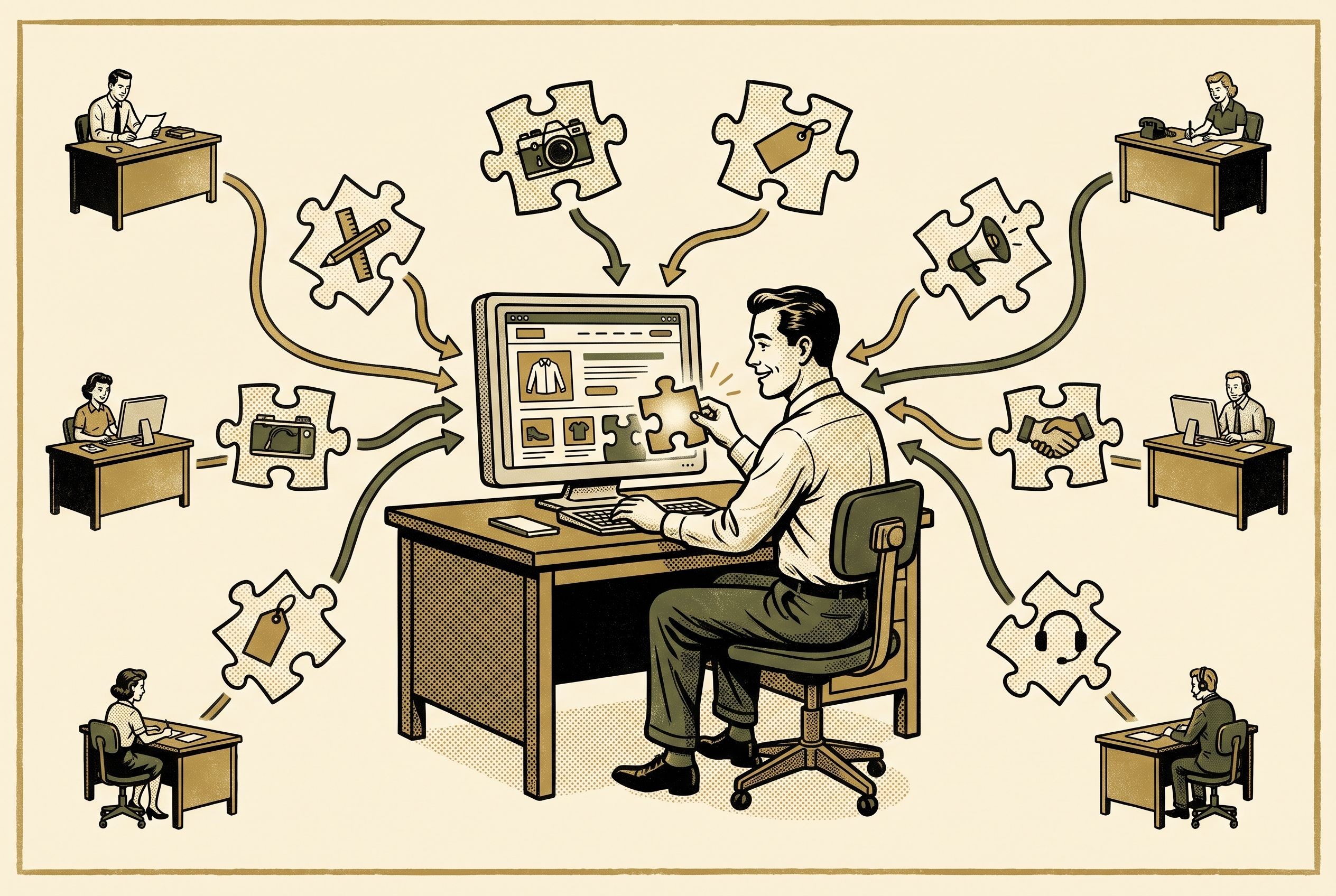 Org Chart: How an Ecommerce Content Coordinator Fits in the PuzzleWrite a Cover Letter With AI That Still Sounds Like You