
Blog
The Rise and Fall of Vice: How a Government Welfare Magazine Became a $5.7 Billion Empire, Then Went Bankrupt
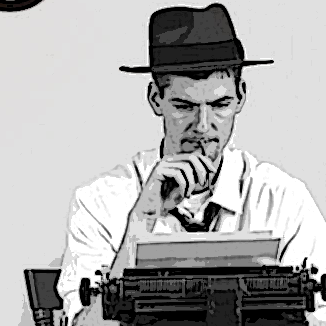

Above: Vice co-founder Shane Smith. Photo by Stefan Schäfer, Lich via Wikimedia Commons, licensed CC BY-SA 4.0, resized.
Information Leak
Here is a story that sounds made up and is not. One of the most influential media brands of the last thirty years, a company that at its peak was valued at five point seven billion dollars and whose founder was a paper billionaire, started as a free magazine funded by a Canadian government welfare program. That is not a metaphor. Vice began on a welfare-to-work grant in Montreal, became the loudest voice of a generation, and then, coke and cash and hubris and all, went completely bankrupt. Here is how it happened, and why it matters to anyone who builds a brand in this world.
It started on welfare in Montreal
In 1994, a recovering heroin addict named Suroosh Alvi took a job at a tiny Montreal startup magazine called the Voice of Montreal. It was not a cool indie project. It was a publicly financed publication created under a welfare-to-work program, designed to give unemployed young people something to do and a reason to get up in the morning. Alvi brought in his friend Gavin McInnes, a tree planter and cartoonist, to edit it. McInnes brought in his childhood friend Shane Smith, a punk kid with a big mouth and a talent for selling, to move advertising. Three broke guys and a government grant. That was the whole thing.
They started writing about the stuff nobody in respectable media would touch. Punk, drugs, rap, skate culture, sex, all of it shot with raw, provocative photography and a voice that talked to Generation X like an actual human instead of a focus group. It was ugly, funny, honest, and completely unlike anything on the newsstand. And it worked, because it was real.
Why they called it Vice
Here is the detail people love. In 1996 the three of them broke with the original publisher, Alix Laurent, and bought the magazine out from under the program that birthed it. They needed a new name, and they did the simplest, most on-brand thing imaginable. They took Voice and dropped the o. Voice became Vice.
It was perfect. Vice is a buzzword for sin, for bad habits, for the things you are not supposed to do. It captured everything the magazine already was, punkish, indulgent, a little dangerous, and it drew a hard line between them and the polite media they were rebelling against. One deleted letter turned a welfare pamphlet into a countercultural flag. The name was the brand, and the brand was an attitude.
The rise: from skater zine to media empire
What happened next is one of the great growth stories in modern media. Vice rode its authenticity out of the zine world and into everything. It went from print to the web, then into video with VBS and later a full cable channel, then into documentaries and an HBO show. It sold the one thing legacy media could not manufacture: genuine access to youth culture, the same culture that powers skate, surf, music, and streetwear.
The money followed the cool. Disney and Fox and the private equity group TPG all bought in, with TPG alone putting in four hundred and fifty million dollars. In 2016 Disney offered three and a half billion dollars to buy the company outright, and Shane Smith turned it down. He was betting on more. By 2017 Vice was valued at five point seven billion dollars, and Smith, the punk kid who once sold ads for a welfare magazine, landed on the Forbes billionaire list. For a moment, being real had made them rich beyond reason.
It did not just cover the culture, it lived in it
The reason Vice mattered to this world specifically is that it did not report on subculture from a safe distance, it embedded in it. Skate was in the DNA from the punk-zine days, and at its peak Vice put real production money behind it. Its cable channel, Viceland, teamed up with Thrasher to make King of the Road, the legendary roving skate competition where teams like Birdhouse, Chocolate, and Toy Machine haul across the country knocking out an insane list of challenges. Vice took a raw skate institution and gave it a real broadcast, no gloss, no sanitizing, the way the culture actually looks.
It did the same thing with food. In 2014 Vice launched Munchies, and Munchies launched Matty Matheson, the tattooed, loud, punk-hearted Toronto chef who became a full-blown star on shows like Dead Set on Life, right down to a line of Munchies meal kits with his recipes. Years before he was an award-winning producer and actor on The Bear, Vice handed him a global platform. That was the whole Vice engine, and it is worth studying. Find the real ones inside a scene, the skaters, the chefs, the musicians, the misfits, and give them the biggest microphone they have ever seen. When it worked, it was the most exciting media on earth.
The fall: the money, the excess, and the collapse
Then the same swagger that built it burned it down. The culture inside the company got as indulgent as the culture it covered, heavy on the spending, the direct selling, the Vegas trips, the excess that gives the Pirate Wires piece its coke-fueled headline. The problem underneath the party was simpler and deadlier. Vice never learned to consistently make money. It missed its 2022 revenue target by a hundred million dollars. The valuation was a story the company could no longer back up.
In May 2023, Vice Media filed for bankruptcy. The company that turned down three and a half billion dollars was sold to its own creditors for roughly three hundred and fifty million. Shane Smith, worth an estimated one billion dollars at the peak, saw his fortune fall to around fifty million. From a welfare grant to nearly six billion dollars to bankruptcy, in a single career.
What Vice teaches anyone building a brand in this world
Vice was built on the exact DNA that powers action sports and outdoor culture: skate, music, authenticity, an audience that can smell a fake from a mile away. That is why the rise makes sense. Real culture is the most valuable thing a brand can have, and you cannot buy it, you have to live it. But the fall carries the harder lesson. Culture gets you in the door and it can build something enormous, and none of it survives without the boring stuff, discipline, profitability, and knowing the difference between a valuation and a business.
Every great brand in this industry is walking that same line, between the authenticity that earns the audience and the fundamentals that keep the lights on. Vice is the cautionary tale at the extreme end of it. Build the culture, absolutely. Just do not forget to build the company.
Sources: Pirate Wires, Forbes, The Hollywood Reporter, and the World Press Institute, Vice on King of the Road, and Mashed on Matty Matheson.
Links Cited on this Page
You Might Also Like
 Fun Day Surf: How Pro Surfer Jamie O'Brien Turned a Massive Audience Into a Real Soft-Top Brand
 Volcom and Ryan Immegart: A Case Study in Building One Deep, Loyal Action Sports CareerWrite a Cover Letter With AI That Still Sounds Like You
 Fun Day Surf Is Building a Real Company: What Its Senior Hires Reveal About Scaling a Surf Brand